
Your eye health is a key part of your overall well-being, and understanding how often you should get an eye exam is a great first step to maintaining your health. Two common eye conditions that you might hear about are cataracts and glaucoma.
Both conditions affect your sight, but cataracts cloud the lens inside your eye, while glaucoma damages the optic nerve that connects your eyes to your brain.
What Is a Cataract?
A cataract is a clouding of the natural lens inside your eye. Think of it like a window that’s become foggy or frosted over. This cloudiness makes it harder for light to pass through to the back of your eye, thereby causing issues with your vision.
Common Signs of Cataracts
- Cloudy or blurry vision
- Colours that seem faded or yellowed
- Difficulty with vision at night
- Lamps, sunlight, or headlights that seem too bright
- A “halo” effect around lights
- Double vision in a single eye
What Causes a Cataract?
Cataracts often develop slowly as you get older. This happens when the proteins in the lens of your eye start to break down and clump together, creating cloudy areas. While age is the main factor, other contributors like eye injuries or certain health conditions can also play a part.
What Is Glaucoma?
Glaucoma is a group of eye conditions that damage the optic nerve. This nerve acts like a data cable between your eye and your brain. When it gets damaged, it can no longer send complete visual signals, which can lead to vision loss.
Common Signs of Glaucoma
Glaucoma often has few or no symptoms in its early stages. When symptoms do appear, they can include things like:
- Gradual loss of side vision, often called tunnel vision
- Blurred vision
- Severe eye pain and nausea (in a less common, acute form)
What Causes Glaucoma?
Glaucoma is usually caused by high pressure inside your eye. This pressure, referred to as intraocular pressure, slowly damages the delicate fibres of your optic nerve. Often, glaucoma progresses without symptoms in its early stages, which is why regular eye exams are important for diagnosing glaucoma promptly.
How to Tell the Difference Between Glaucoma & Cataracts
The simplest way to think about it is that cataracts affect the clarity of your vision, while glaucoma affects your field of vision.
The Main Difference in Vision
A cataract makes your vision blurry or dim, much like you’re looking through a dirty lens. Glaucoma typically affects your peripheral, or side, vision first. Many people don’t notice this loss until a significant amount of vision is gone.
Is Glaucoma More Serious Than Cataracts?
Both conditions can impact your sight if left unmanaged. However, vision loss from cataracts can often be restored with a common procedure. Vision loss from glaucoma is permanent and cannot be recovered, so early detection is important.
How Treatment Options Differ
Because these are two separate conditions, the treatments are not the same. Your treatment plan will depend on your specific diagnosis and the stage of the condition. Your eye care professional can walk you through the options that are right for you.
Cataract Treatment
For early cataracts, a new prescription for your glasses may help improve your vision. As the condition progresses, the cloudy natural lens of your eye can be removed and replaced with an artificial lens as part of a common, routine procedure.
Glaucoma Treatment
Glaucoma treatment focuses on lowering the pressure in your eye to prevent more damage to the optic nerve. This is often done with prescription eye drops that you use daily. Other options may include laser treatments or surgical procedures.
Does Cataract Removal Help Glaucoma?
In some cases, removing a cataract can help lower eye pressure. The new, artificial lens is thinner than your natural lens, which can create more space inside the eye for fluid to drain, potentially decreasing pressure in some cases.
The Role of Regular Eye Exams
A comprehensive eye exam is the best way to detect these and other eye health issues early. Early detection often leads to better outcomes. It is important not to delay an eye check if your vision has become blurry, as cataracts and glaucoma are only two examples of eye diseases that can cause blurred vision. Many times, the impact of an eye disease is not reversible, so early detection is really important in order to preserve vision.
Why You Need a Professional Diagnosis
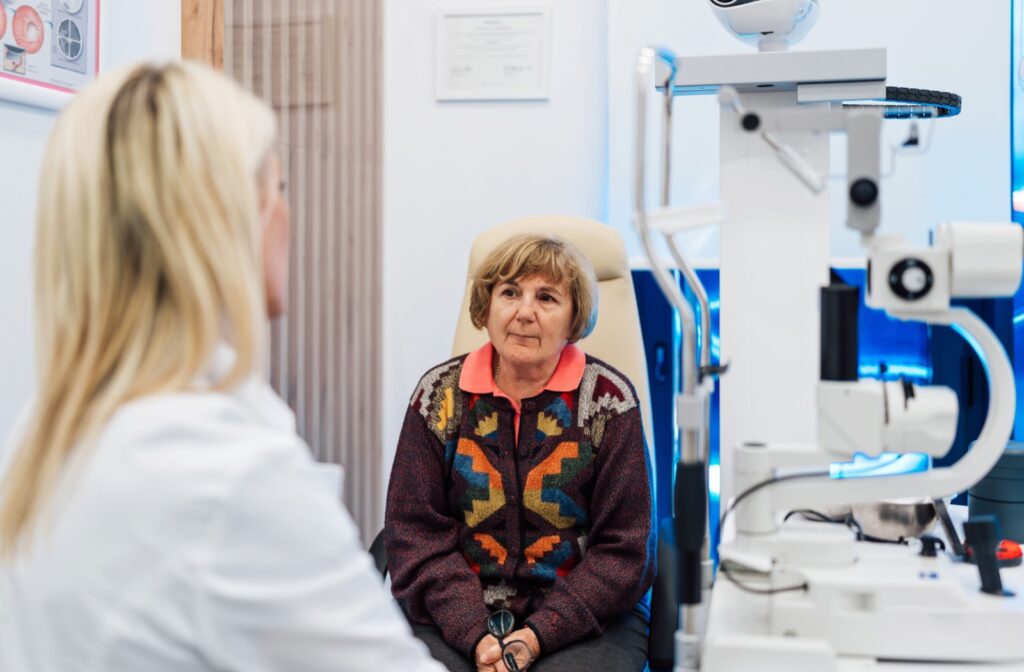
Trying to figure out eye problems on your own can be confusing and may lead to delays in care. Your eye doctor, on the other hand, has the tools to examine your eye in depth, including the lens and optic nerve. This helps them get a clear picture of your health.
What to Expect at an Eye Exam
During an exam, your doctor will check your vision, measure your eye pressure, and examine the structures inside your eye. These tests are simple, shouldn’t cause pain, and often take about 30 to 60 minutes. They provide important information that helps protect your sight for years to come.
Regular check-ups are a key part of your overall health care. If you have concerns about your vision or if it’s been a while since your last exam, now is always a good time to schedule an appointment. At Tutt Street Optometry, we’re dedicated to helping you understand your eye health. Our team is here to answer your questions and provide the care you need. Contact us today to book your next comprehensive eye exam.