
Key Takeaways
- Polarized lenses have a chemical filter that blocks horizontal glare from flat surfaces like water, roads, and snow.
- Non-polarized lenses dim all light evenly, but do not target glare specifically.
- Polarized sunglasses can reduce eye strain, squinting, and headaches during outdoor activities.
- They are not ideal for reading LCD screens or spotting ice patches.
- UV protection and polarization are two separate features. You can look for both in one pair of sunglasses.
More Than Just Dark Lenses
You step outside on a sunny afternoon and the glare bouncing off the pavement hits you like a wall. You squint, your eyes water a little, and your sunglasses don’t seem to help as much as you’d expect. You wonder what you can do to see more clearly.
Polarized sunglasses have a filter built into the lens that blocks the glare from flat surfaces like water and snow, allowing your eyes to work less and see more clearly. If you’re curious about finding sunglasses that suit your face and needs, our team at Tutt Street Optometry can help you find a pair of polarized sunglasses that meet your lifestyle needs.
How Polarized Lenses Work
When sunlight hits a flat surface like water, a wet road, or a car hood, it bounces off as a horizontal beam. This is what causes glare.
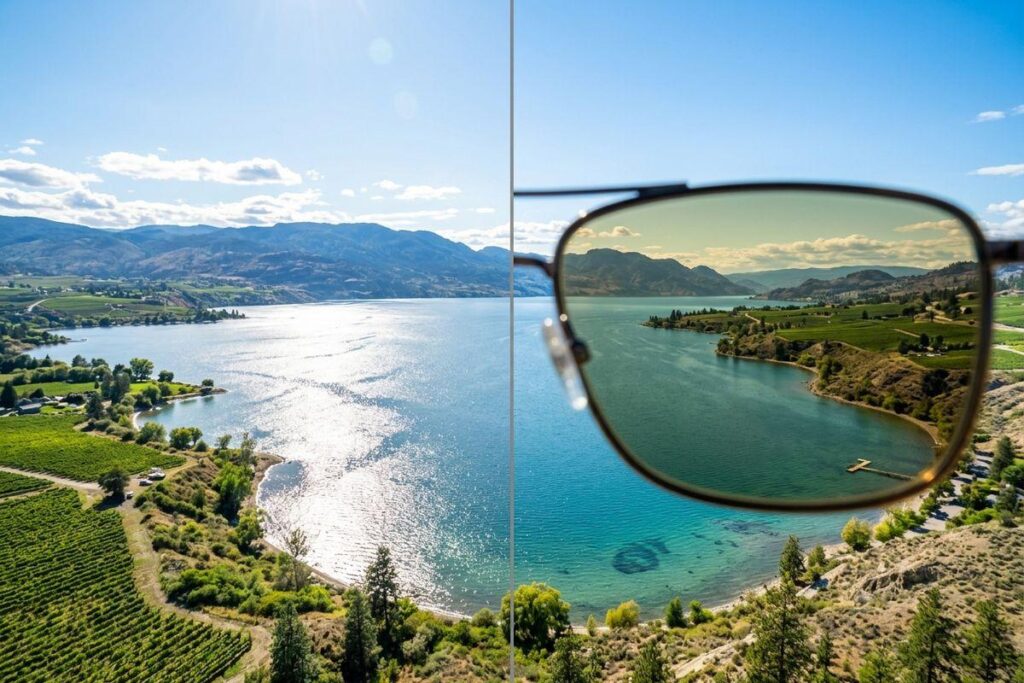
Polarized lenses have a chemical filter applied vertically inside the lens. This filter blocks horizontal light waves, while allowing vertical light waves through. The result is a noticeably clearer, more comfortable view, especially in bright conditions. Colours look richer, shadows have more depth, and details that were washed out by glare start to come through.
Polarized vs. Non-Polarized Sunglasses
What Non-Polarized Lenses Do
Non-polarized lenses work by reducing the overall amount of light that reaches your eyes. They dim everything equally, much like when you turn down the brightness on your screen. That helps on a sunny day, but it doesn’t do anything specific about glare.
What Polarized Lenses Add
Polarized lenses don’t just dim light. They filter it selectively. Glare gets blocked while the rest of the scene stays clear and well-lit. You’ll notice that colours look more vibrant and contrast is sharper, making it easier to pick out details in your surroundings. If you’re browsing options, exploring the range of sunglass brands available can give you a clearer sense of what’s out there across different lens types and styles.
The Benefits of Polarized Sunglasses
Glare Reduction and Clarity
On a bright day near water or on a long highway drive, glare can affect how clearly you see the world. Polarized lenses help cut through that visual noise so you can spot details faster and with less effort. That matters whether you’re watching for a fish beneath the surface or keeping track of a cyclist on the road ahead.
Eye Comfort and Fatigue
Squinting is your eyes’ natural response to too much light. However, if you squint for hours on end, you’ll likely end up with tired eyes, tension around your brow, and sometimes a headache.
Polarized lenses reduce how hard your eyes work in bright environments, which can mean more comfortable afternoons outdoors and fewer headaches at the end of the day. If you already deal with eye strain from prolonged screen use or other factors, cutting down on outdoor glare is one more way to give your eyes a break.

When to Wear Polarized Sunglasses and When to Skip Them
Great Situations for Polarized Lenses
Polarized sunglasses shine in high-glare settings where reflected light is a constant factor. Some of the most common situations where they make a real difference include:
- Fishing or boating, where water reflection can make it hard to see below the surface
- Driving on sunny days with glare from wet pavement or other vehicles
- Beach days where sand and water both cause significant glare
- Skiing or snowboarding on bright days, when snow reflects sunlight
When Polarized Lenses Are Not Ideal
There are a few situations where polarization can actually work against you.
- LCD screens like GPS dashboards, ATM displays, and some car instrument panels can appear dark or distorted when viewed through polarized lenses.
- Icy patches on roads or ski runs often appear as a reflective sheen. Polarized lenses can reduce that visual cue, making ice harder to spot.
UV Protection and Polarization: Two Different Things
These two features are often confused, but they’re actually two distinct functions. UV protection blocks ultraviolet rays from reaching your eyes. UV light is invisible radiation that can damage your eyes over time with repeated exposure. Polarization, on the other hand, blocks glare from visible reflected light. One protects your eye health, the other improves visual comfort.
Not all polarized sunglasses come with UV protection, and not all UV-protective sunglasses are polarized. However, when you’re shopping for your next pair of sunglasses, it’s worth looking for both. An eye doctor in Kelowna can help you sort through your options and match the right lens features to how you actually spend your time outside.
At Tutt Street Optometry, our team is happy to walk you through our selection of sunglasses and help you find a pair that fits your lifestyle, your prescription if you have one, and your budget. Reach out or stop by to get started.